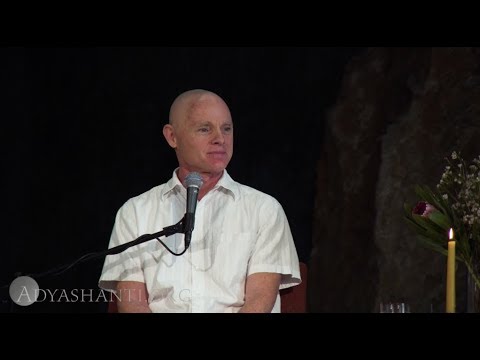
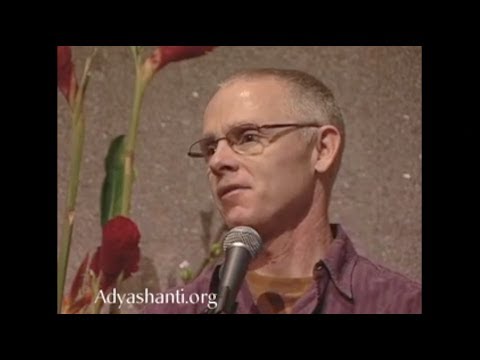
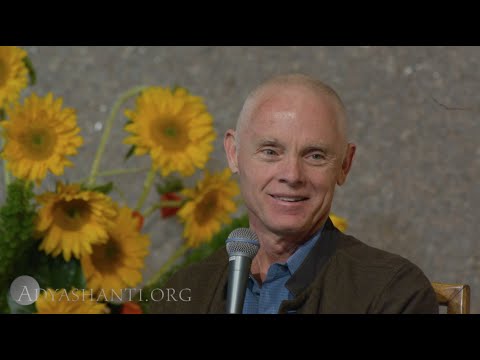
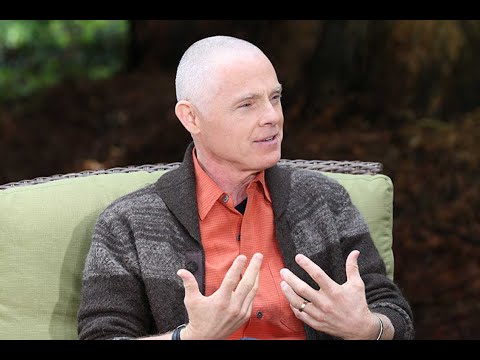
In this great little five minute video from Adyashanti, he attempts to describe the final return to the Absolute (who we are). Let’s take a moment to visualize this wonderful reminder…
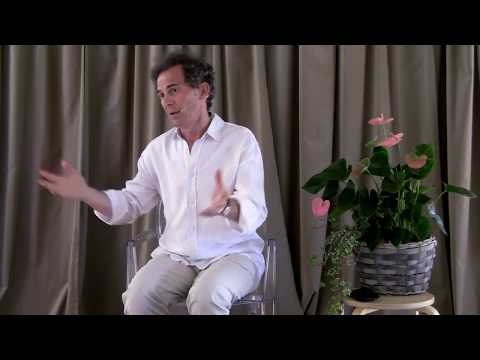
In this awesome ten minute video clip, Rupert explains the reality of good, bad and free will within the non-dual world of awareness. He explains how these concepts can still be valid within our essential true nature of freedom. Let’s listen to this five star video…
In this lovely 5 minute video, Adyashanti explains that the world of experience has a very powerful magnetic attraction but that we must learn to let life be, let what happens… happen, and find out what remains. This is one way to experience our true nature…
Eckhart Tolle shares insights from his own life, including a spontaneous shift in consciousness and subsequent years of living in a state of peace, which he didn’t fully understand at the time. He advises on how to approach these shifts in awareness, suggesting that it is more about allowing the mind to align with this new state rather than trying to rationalize it further. Eckhart Tolle concludes with the notion that awareness, once realized, changes the perception of the self and the world, transcending personal narratives and memories and aligning with a timeless, formless essence that is the true nature
[More]
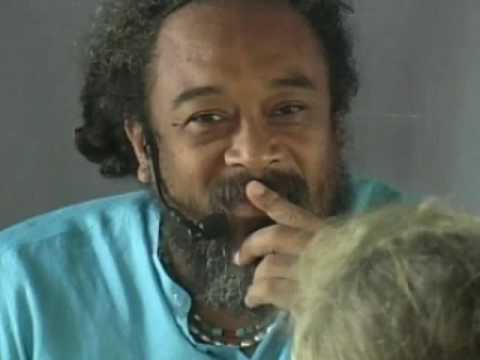
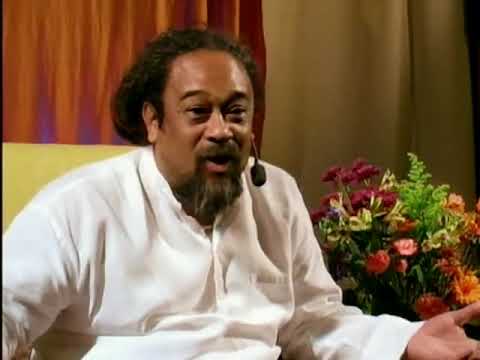
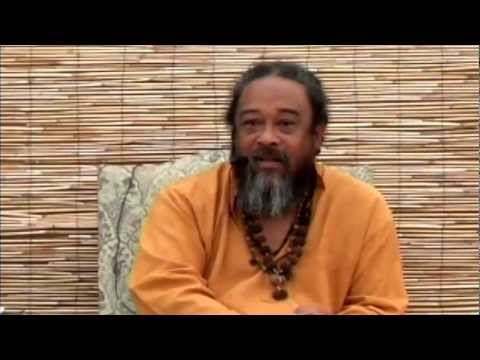
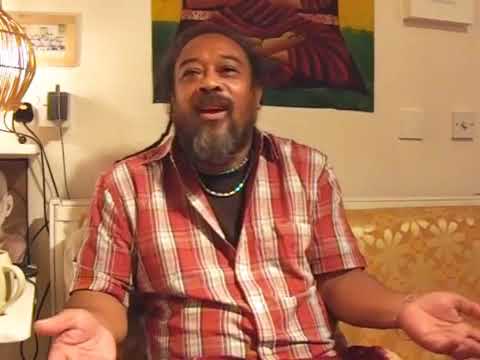
Mooji explains Nisargadatta Maharaj’s famous quote “I leave my human nature to unfold according to what its destiny is, I remain as I am”.
In this 8 minute video, Eckhart Tolle discusses the limitations of using willpower for manifestation, suggesting that wanting something implies a lack of possession. He advises that the most effective way to manifest is by feeling that you already possess what you desire, which arises from a sense of completeness and presence in the moment. Eckhart Tolle emphasizes merging desire with a sense of fullness and being, creating a powerful manifestation environment where happiness is not dependent on external achievement.
In this AMAZING 11 minute video, Nada explain how one can easily perform a self-assessment of their spiritual progress. He explains that it has NOTHING TO DO with how many books you’ve read, how knowledgeable you are on spiritual topics, whether you are following a guru, part of or leader of a spiritual community, or how proficient you are at manifesting. There is one simple test that will show you the spiritual progress you are making, let’s find out what it is…
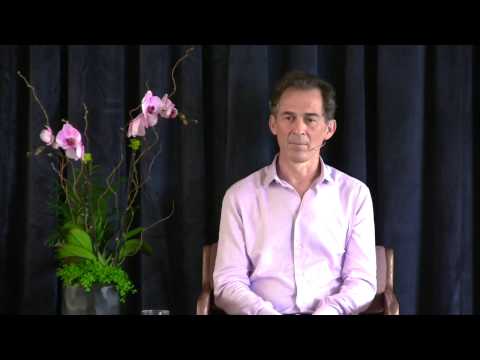
Here is an interesting clip of Rupert Spira explaining that there is nothing but one ever-present Awareness. We ARE that!
In this six minute video from Mooji, he replies to a question about the process involved to realization. He replies by asking the questioner, “First, lets find out who is the one that wants to know about this process?” Mooji goes on to explain why THIS question is the one that is important…
What does it mean to be secure in oneself? In this fantastic 7 minute video, Nada addresses one of the most universal misconceptions about inner as well as outer perceived security. Let’s listen as Nada takes us on a much closer look at the idea of security and how we become more secure, more confident, more self-assured…
In this very short (5 minutes) but direct video, a woman asks about the grieving process. This is a super popular question so let’s get started…
In this wonderful 11 minute audio clip, Alan helps us understand the nature of our true nature. Alan Wilson Watts (6 January 1915 – 16 November 1973) was a British philosopher, writer, and speaker, best known as an interpreter and populariser of Eastern philosophy for a Western audience. Born in Chislehursjt, England, he moved to the United States in 1938 and began Zen training in New York.
In this eight minute audio, Alan gives us a lot to think about when we realize that everything that can be known to us in the universe can only be known from a human perspective. Let’s listen in on this little treat for the intellect…
This amazing 10 minute video from Mooji helps us to see clearly that intention, want and desire is the most common source of our suffering. He also explains why it seems that the fulfillment of our desires brings us joy, when in reality it is only a very temporary period when we stop suffering the desire.
In this video, Eckhart Tolle discusses the importance of disidentification from others’ pain and negativity. He explains that as presence (awareness) grows, one becomes less affected by external negative energy. Eckhart Tolle also highlights the gender differences in sensitivity to energy fields, with women generally being more sensitive than men.
This short video from Mooji could be used as a wonderful little five minute guided meditation or whenever one needs to be reminded of their true nature. These words of wisdom express that the same Truth that was realized by Mooji is available for all who seek it. Let’s listen…
In this short 7 minute video, a questioner says she understands and has had glimpses of her true position but doesn’t seem to be able to stabilize there. Let’s listen to Rupert’s response…
In this super short four minute video clip from Adyashanti, we take a closer look at our psychological self and what it does in order to keep itself in existence. Without this compulsive activity, the self we take ourselves to be would just cease to exist.
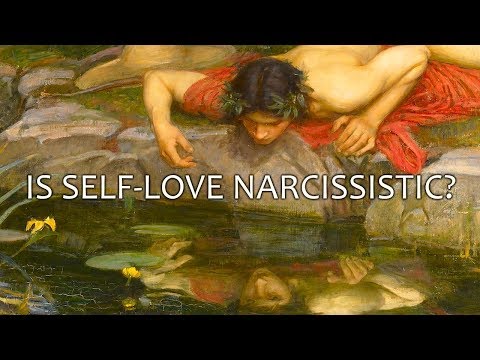
Here’s a beautiful little eight minute video from a lovely being named Nada who shares with us a very profound message about the difference between self love and narcissism. Let’s listen… Click here for more Nada videos.
This short 5 minute video clip from Jeff Foster explains that emotions, feelings and sensations are never personal or impersonal but rather only a form of energy that we personalize by adding false labels and identifying with it. Having the ability to recognize this can dramatically affect the response we have, if indeed there is any response necessary at all. See what Jeff has to say about this…
In this short six minute audio, Adyashanti explains that although we definitely don’t want to remain as the ego for a sense of identity, you needn’t go into battle with the ego, nor indulge it, and instead utilize it as a useful function of life. Let’s find out what he means…
In this 8 minute video, Mooji explains that we need to stop looking for an experience of Awakening (Enlightenment, Realization). He explains how freedom is NOT an experience, no matter how special we think it may be.
In this super short video from an interview with Mooji, he responds to questions about satisfaction, wants, desires, and simplicity of life. Even though we can see in this interview that a seed existed within him to move from England, we also can see that there was no plan, no goal, only a contentment for living for the moment, and yet life has brought him to Monte Sahaja and an entire community built around him.
This short video is a DIRECT pointing to the self. It also discusses how the mind (or most anyone else) doesn’t want you to recognize because then they will loose power over you. Brilliant!
In this short video, Mooji explains that after realization there is a crucial time period where we need to remain extremely vigilant to detect the efforts of the mind to creep back in and identify once again. In other words, once “Realization” has taken place, the mind identity will not instantly give up and die. It will come back again over and over until a maturity comes and permanently drives away the psychological self.
In this video, you are in for a very special treat. In this 2 part video, Mooji answers a lovely ladie’s question about decision making by first taking her to the “Self”. Watch as Mooji skillfully takes this lady from ego to “self” while taking you along for the journey. For Part 1 of this video, click here.
In this lovely 8 minute visit with Mooji, a questioner says that she feels she is free and using her ego as her anchor, but she wants to know about forgiveness. Mooji explains that when you are TRULY free, there is no need for forgiveness. Let’s listen…
In this revealing 12 minute video, Rupert Spira explains that most mistakenly believe that there are THREE states called “waking”, “dreaming” and “deep sleep”, but the reality is that there are only two states because “deep sleep” is a non-state. It is very important to know this distinction. Let’s listen to his simple explanation…
In this powerfully clear talk, Mooji exposes the subtle ways of the mind that keep us feeling that we are not yet our true Self. Mooji calls on two students to walk us through, step by step, the arising of negative and oppressive states, and how to transcend them by applying the simple guidance offered in Satsang. Mooji shows us again how we can bring all the difficult feelings and oppressive thoughts that keep us feeling bound into the light of clear seeing, and be timelessly free.
In this very short 5 minute video, Gangaji is speaking about the stories we tell ourselves. There is an innocence still present in us that really doesn’t buy into our stories anyway. When you expose the story you can be naked to yourself, conscious and overflowing in love.